Key Takeaways
- Reading forex charts is the foundational skill that separates traders who react to markets from those who anticipate them, and the Riverquode WebTrader platform delivers professional charting tools that make this skill accessible to traders at every level.
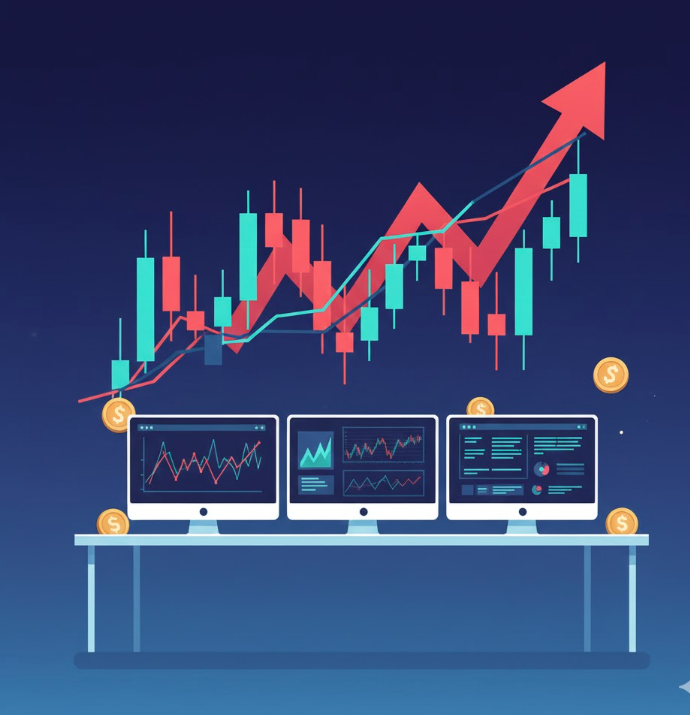
- Candlestick charts are the most widely used chart type in forex trading because they communicate four pieces of price information simultaneously: open, high, low and close, revealing both price direction and market sentiment in a single visual.
- Trend identification is the most important analytical framework in technical trading, and Riverquode’s advanced charting tools make spotting and trading trends straightforward for beginners and experienced traders alike.
- Riverquode provides live trading signals, daily market analysis videos and a comprehensive educational library including dedicated eBooks on technical analysis, giving traders the analytical tools and knowledge to interpret charts with confidence.
- Riverquode is proudly regulated by the Financial Sector Conduct Authority (FSCA) of South Africa under license number 52830, providing traders with the secure, transparent and professional trading environment in which chart analysis and strategy execution thrive.
- A comprehensive Riverquode review consistently highlights the platform’s TradingView partnership, advanced charting capabilities and professional technical analysis suite as standout features for chart-focused traders.
Table of Contents
- Introduction
- Quick Answer: Why Does Reading Forex Charts Matter?
- The Three Main Forex Chart Types
- Line Charts
- Bar Charts
- Candlestick Charts
- How to Read Candlestick Charts
- Anatomy of a Candlestick
- Bullish vs Bearish Candlesticks
- Key Candlestick Patterns Every Trader Should Know
- How to Read Forex Trends
- What Is a Trend?
- Uptrends, Downtrends and Sideways Markets
- Trendlines and How to Draw Them
- Support and Resistance Levels
- How to Read Forex Trading Signals on Riverquode
- What Are Trading Signals?
- Technical Indicators on the Riverquode WebTrader Platform
- Live Signals from Riverquode
- Using Charts on the Riverquode WebTrader Platform
- Platform Charting Features
- TradingView Partnership
- Timeframes and Their Uses
- Riverquode’s Education Resources for Chart Traders
- Is Riverquode a Legitimate Broker for Chart-Based Trading?
- FSCA Regulation and Trust
- Client Protection Features
- Riverquode Account Types and Trading Conditions
- Riverquode Deposits, Withdrawals and Getting Started
- Riverquode Customer Support
- Riverquode Review Summary: Why Chart Traders Choose Riverquode
- Conclusion and Next Steps
Introduction
The ability to read a forex chart is one of the most valuable skills any trader can develop. Charts are the visual language of the market, encoding price history, momentum, sentiment and opportunity into patterns that, once understood, become the foundation of every trade decision. Riverquode, a proudly FSCA-regulated forex broker, has built its WebTrader platform around giving traders the charting tools, technical analysis resources and live market data they need to read charts effectively and trade with conviction. This guide walks through everything a trader needs to know to read forex charts on Riverquode, from the basics of candlestick construction through to trend identification, signal reading and the practical use of the platform’s professional charting environment. Whether a trader is researching their first Riverquode review or an experienced participant refining their technical approach, this guide delivers a clear, structured and actionable foundation for chart-based trading.
Quick Answer: Why Does Reading Forex Charts Matter?
Forex charts are the primary tool through which price action is communicated to traders. Every price movement in the forex market, every trend, every reversal and every period of consolidation, is recorded and displayed on a chart. A trader who can read a chart accurately understands where price has been, where it currently is, and where it is most likely to go next based on the patterns that have repeated throughout market history. On the Riverquode WebTrader platform, charts are integrated with real-time data, technical analysis indicators, signal overlays and professional charting tools that transform raw price data into actionable trading intelligence.
The Three Main Forex Chart Types
Before diving into candlestick analysis, it is important to understand the three chart types available in forex trading and why candlestick charts have become the industry standard.
Line Charts
A line chart connects closing prices at each time interval with a continuous line. It is the simplest chart type and provides a clear visual representation of overall price direction, but it loses critical information about price movement within each period. Line charts are useful for identifying the broad direction of a market or spotting major support and resistance zones, but they are insufficient for the kind of detailed analysis that informs professional trading decisions.
Bar Charts
A bar chart, also known as an OHLC (Open, High, Low, Close) chart, represents each time period as a vertical bar. The top of the bar marks the period’s high, the bottom marks the low, a small horizontal line on the left marks the open, and a small horizontal line on the right marks the close. Bar charts communicate significantly more information than line charts, but the visual representation is less intuitive than candlesticks and is rarely used by modern retail traders.
Candlestick Charts
Candlestick charts are the overwhelmingly preferred chart type in professional forex trading. They present the same four data points as bar charts (open, high, low, close) but in a visual format that is far easier to read and that reveals market sentiment at a glance. The body of the candle (the filled or empty rectangle between open and close) and the wicks (thin lines extending above and below the body) together tell a complete story about price behavior during each period. Candlestick charts are the default chart type on the Riverquode WebTrader platform.
How to Read Candlestick Charts
Anatomy of a Candlestick
Every candlestick contains the following components:
| Component | What It Represents |
|---|---|
| Body | The range between the open and close prices for the period |
| Upper Wick (Shadow) | The highest price reached during the period |
| Lower Wick (Shadow) | The lowest price reached during the period |
| Open | The price at which the period began |
| Close | The price at which the period ended |
The relationship between these components tells traders not just where price moved during the period, but how much conviction the buyers or sellers demonstrated in driving that movement.
Bullish vs Bearish Candlesticks
The color of the candle body immediately communicates the direction of price movement during that period:
- A bullish candle (typically green or white) forms when the closing price is higher than the opening price, indicating that buyers were in control during the period.
- A bearish candle (typically red or black) forms when the closing price is lower than the opening price, indicating that sellers were in control during the period.
The size of the body relative to the wicks adds further nuance. A large body with small wicks indicates strong conviction in the direction of movement. A small body with large wicks indicates indecision, with both buyers and sellers competing for control within the period.
Key Candlestick Patterns Every Trader Should Know
Candlestick patterns are formations of one or more candles that historically precede specific market movements. Mastering these patterns is central to the kind of technical analysis covered in Riverquode’s Basic and Advanced Technical Analysis eBooks.
Single Candlestick Patterns:
| Pattern | Description | Signal |
|---|---|---|
| Doji | Body nearly absent, open and close almost equal | Indecision, potential reversal |
| Hammer | Small body at top, long lower wick | Bullish reversal after downtrend |
| Shooting Star | Small body at bottom, long upper wick | Bearish reversal after uptrend |
| Marubozu | Long body, no or minimal wicks | Strong directional conviction |
| Spinning Top | Small body, long wicks both sides | Indecision and potential trend pause |
Two-Candlestick Patterns:
| Pattern | Description | Signal |
|---|---|---|
| Bullish Engulfing | Large bullish candle completely engulfs previous bearish candle | Strong bullish reversal signal |
| Bearish Engulfing | Large bearish candle completely engulfs previous bullish candle | Strong bearish reversal signal |
| Tweezer Tops | Two candles with matching highs at resistance | Bearish reversal |
| Tweezer Bottoms | Two candles with matching lows at support | Bullish reversal |
Three-Candlestick Patterns:
| Pattern | Description | Signal |
|---|---|---|
| Morning Star | Bearish candle, small indecision candle, strong bullish candle | Strong bullish reversal |
| Evening Star | Bullish candle, small indecision candle, strong bearish candle | Strong bearish reversal |
| Three White Soldiers | Three consecutive bullish candles, each closing higher | Strong bullish momentum |
| Three Black Crows | Three consecutive bearish candles, each closing lower | Strong bearish momentum |
These patterns carry statistical significance based on historical price behavior, but they are always more reliable when read in the context of the broader trend, which leads to the next critical skill: trend identification.
How to Read Forex Trends
What Is a Trend?
A trend is the general direction in which a market is moving over a given time period. The foundational principle of technical analysis, first formalized in Dow Theory and covered in Riverquode’s Market Analysis eBook, is that markets move in trends, and those trends tend to persist until a definitive reversal signal appears.
Traders who align their trade direction with the prevailing trend have a statistically higher probability of success than those who consistently trade against it. This is why identifying the trend is the first analytical step in any technically driven trading decision.
Uptrends, Downtrends and Sideways Markets
| Trend Type | Definition | Trading Implication |
|---|---|---|
| Uptrend | Series of higher highs and higher lows | Look for buy opportunities on pullbacks to support |
| Downtrend | Series of lower highs and lower lows | Look for sell opportunities on rallies to resistance |
| Sideways (Range) | Price oscillates between defined support and resistance | Buy near support, sell near resistance |
An uptrend is characterized by a price structure of successive higher highs and higher lows. Each rally takes price above the previous peak, and each pullback holds above the previous trough. This structure reflects a market in which buyers are consistently more aggressive than sellers.
A downtrend is the mirror image: a series of lower highs and lower lows in which sellers consistently dominate buyers over time.
A sideways or ranging market has no clear directional bias. Price oscillates between a defined upper boundary (resistance) and a defined lower boundary (support). Range-based strategies, which involve buying near support and selling near resistance, are well-suited to these conditions.
Trendlines and How to Draw Them
A trendline is a diagonal line drawn through successive price points that defines the slope and direction of a trend. Drawing trendlines correctly is one of the most practical and immediately useful skills in chart reading.
To draw an uptrend line: Connect at least two successive higher lows with a diagonal line extending to the right. The more times price tests this line without breaking below it, the stronger and more significant the trendline becomes.
To draw a downtrend line: Connect at least two successive lower highs with a diagonal line extending to the right. Again, multiple tests of this line without a break to the upside reinforce its significance.
When price breaks convincingly through a trendline with strong momentum and volume, it signals a potential trend reversal or acceleration that traders using the Riverquode WebTrader platform’s advanced charting tools can identify and act upon.
Support and Resistance Levels
Support and resistance are among the most powerful concepts in technical analysis. Support is a price level at which buying interest has historically been strong enough to halt or reverse a decline. Resistance is a price level at which selling interest has historically been strong enough to halt or reverse an advance.
Key characteristics of support and resistance:
- Horizontal levels: Identified by price areas where the market has repeatedly reversed or consolidated
- Round numbers: Psychological price levels (1.2000, 1.2500 on EUR/USD) often function as support or resistance
- Previous highs and lows: Old highs often become future resistance; old lows often become future support
- Role reversal: When a support level is broken, it often becomes future resistance, and vice versa
Traders using Riverquode’s platform can draw horizontal support and resistance lines directly on their charts, creating a clear visual framework for identifying entry and exit zones.
How to Read Forex Trading Signals on Riverquode
What Are Trading Signals?
A trading signal is an indication, derived from technical or fundamental analysis, that a particular market may be approaching a trading opportunity. Signals can be generated by the combination of price patterns, indicator readings, fundamental events or the crossing of specific price levels. On Riverquode, traders have access to live professional signals that identify potential trading opportunities across currencies, commodities, indices, stocks and crypto in real time.
Technical Indicators on the Riverquode WebTrader Platform
The Riverquode WebTrader platform integrates a full suite of technical analysis indicators that traders can overlay on their charts to generate and confirm trading signals. Key indicator categories include:
Trend Indicators:
| Indicator | How It Works | Signal Use |
|---|---|---|
| Moving Average (MA) | Smooths price data to reveal the underlying trend direction | Price above MA suggests uptrend; price below suggests downtrend |
| Exponential Moving Average (EMA) | Weighted MA giving more importance to recent prices | Faster to react to price changes than simple MA |
| MACD | Moving Average Convergence Divergence; measures momentum | Crossovers and divergences signal potential trend changes |
| Bollinger Bands | Volatility bands above and below a moving average | Price at upper band = potential overbought; lower band = potential oversold |
Momentum Indicators:
| Indicator | How It Works | Signal Use |
|---|---|---|
| RSI (Relative Strength Index) | Measures speed and magnitude of price changes (0-100 scale) | Above 70 = overbought; below 30 = oversold |
| Stochastic Oscillator | Compares closing price to range over a period | Crossovers in overbought/oversold zones signal reversals |
| CCI (Commodity Channel Index) | Measures deviation from statistical mean | Extreme readings signal overbought or oversold conditions |
Volume and Volatility Indicators:
| Indicator | How It Works | Signal Use |
|---|---|---|
| ATR (Average True Range) | Measures average price range over a set period | High ATR = high volatility; useful for stop-loss placement |
| Parabolic SAR | Places dots above or below price | Dots below price = uptrend; dots above = downtrend |
These indicators are available directly within the Riverquode WebTrader platform and are the subject of detailed coverage in the Advanced Technical Analysis eBook available free through Riverquode’s education center.
Live Signals from Riverquode
Beyond the indicators traders apply to their own charts, Riverquode provides live professional trading signals generated across all major asset classes. These signals are delivered in real time through the platform and cover:
- Currencies signals
- Commodities signals
- Indices signals
- Stocks signals
- Crypto signals
Live signals are particularly valuable for traders who are still developing their technical reading skills, providing professionally generated trade ideas that they can evaluate against their own chart analysis and use as a learning reference alongside Riverquode’s education materials.
Using Charts on the Riverquode WebTrader Platform
Platform Charting Features
The Riverquode WebTrader platform delivers a professional charting environment accessible from any browser without downloads or installations. Key charting features include:
- Multiple chart types including candlestick, bar and line
- Full suite of technical analysis indicators
- Drawing tools for trendlines, support and resistance, channels and Fibonacci levels
- Multiple timeframe options from one-minute to monthly
- Real-time price data and live market feeds
- Customizable chart layouts and color schemes
- One-click trade execution directly from the chart
The platform is designed to serve both beginners who are reading their first charts and experienced professionals executing complex multi-chart analysis simultaneously, making Riverquode a genuinely versatile technical trading environment.
TradingView Partnership
One of the most significant features highlighted in any thorough Riverquode review is the broker’s official TradingView partnership. TradingView is widely regarded as one of the most powerful and feature-rich charting platforms in the world, trusted by millions of traders globally. This partnership brings TradingView’s professional charting capabilities directly into the Riverquode trading environment, giving traders access to:
- Industry-leading chart rendering and performance
- An extensive library of community-built technical indicators and scripts
- Advanced drawing and annotation tools
- Multi-chart layouts for analyzing multiple instruments simultaneously
- Price alert functionality with real-time notifications
For chart-focused traders, the TradingView integration represents a significant competitive advantage that elevates Riverquode’s analytical capabilities beyond what most brokers in the same category offer.
Timeframes and Their Uses
One of the most important decisions a chart reader makes is the timeframe they choose to analyze. Each timeframe reveals a different perspective on the same market, and professional traders typically use multiple timeframes in combination to confirm their analysis.
| Timeframe | Common Use | Trader Type |
|---|---|---|
| 1-minute (M1) | Very short-term scalping entries | Scalpers |
| 5-minute (M5) | Short-term intraday entries | Day traders |
| 15-minute (M15) | Intraday trend confirmation | Day traders |
| 1-hour (H1) | Intraday trend and swing entries | Day and swing traders |
| 4-hour (H4) | Medium-term trend identification | Swing traders |
| Daily (D1) | Long-term trend direction | Swing and position traders |
| Weekly (W1) | Major trend and key levels | Position traders |
A practical multi-timeframe approach involves identifying the trend on the daily chart, narrowing down the entry zone on the 4-hour chart, and timing the precise entry on the 1-hour or 15-minute chart. This top-down approach reduces noise and improves entry precision, and it is a methodology well supported by the charting infrastructure available on the Riverquode WebTrader platform.
Riverquode’s Education Resources for Chart Traders
Riverquode’s education ecosystem is one of the most comprehensive available from any FSCA-regulated broker, and it is particularly strong in technical analysis content. Traders focused on chart reading will find the following resources especially valuable:
| Resource | Content Relevant to Chart Reading |
|---|---|
| Basic Technical Analysis eBook | Price patterns, trend types, support and resistance |
| Advanced Technical Analysis eBook | Pattern recognition, advanced techniques and indicator use |
| Market Analysis eBook | Fundamental analysis, technical analysis frameworks and Dow theory |
| Advanced Strategies eBook | Timeframes, entry and exit strategies using chart analysis |
| Daily Market Videos | Live chart analysis updated every trading day |
| Live Trading Signals | Real-time signal overlays to compare with self-generated analysis |
| Knowledge Hub | Practical answers to chart reading and platform navigation questions |
| Platform Tutorials | Step-by-step guides for using charting tools on the Riverquode platform |
| Trading Glossary | Definitions of all key technical analysis and chart reading terms |
The combination of structured eBook content, daily chart analysis videos and real-time signals creates a learning environment where chart reading skill can be developed systematically and applied immediately in a live trading context.
Is Riverquode a Legitimate Broker for Chart-Based Trading?
Online searches occasionally surface terms like “riverquode scam” or “is Riverquode legit,” a common pattern driven by the general caution traders apply to any online broker. The factual position is clear: Riverquode is a properly regulated, transparent and documented trading entity.
FSCA Regulation and Trust
Riverquode operates through AzurevistaFX (Pty) Ltd, a company registered in South Africa and fully authorized and regulated by the Financial Sector Conduct Authority (FSCA) under license number 52830.
| Regulatory Detail | Information |
|---|---|
| Operating Entity | AzurevistaFX (Pty) Ltd |
| Regulator | Financial Sector Conduct Authority (FSCA) |
| License Number | 52830 |
| Registration Number | 2020/750823/07 |
| Registered Address | 2nd Floor Norwich Place, Norwich Close, Sandown Sandton, Gauteng 2031, South Africa |
Traders can verify this regulatory status independently at any time through the FSCA’s official entity search portal at fsca.co.za. The FSCA requires regulated entities to maintain high standards of financial conduct, client fund protection and operational transparency.
Client Protection Features
Every Riverquode account includes:
- Segregated client funds held separately from operational capital
- Negative balance protection across all account tiers
- PCI DSS-aligned payment security with routine vulnerability testing
- Formal complaint handling with a five-day acknowledgement and six-week resolution target
Riverquode Account Types and Trading Conditions
Riverquode offers five account tiers, each providing the same charting tools, technical analysis suite and TradingView integration, with spreads tightening progressively through the tiers.
| Account | Ideal For | Spreads From | Swap Discount | Commission |
|---|---|---|---|---|
| Classic | Beginners | 2.5 pips | No | $0 |
| Silver | Developing Traders | 2.5 pips | Yes | $0 |
| Gold | Experienced Traders | 1.8 pips | Yes | $0 |
| Platinum | Professional Traders | 1.4 pips | Yes | $0 |
| VIP | Expert and High-Volume Traders | 0.9 pips | Yes | $0 |
Every account includes:
- Access to all 160+ CFD instruments across six asset classes
- Leverage up to 1:400 on forex
- Zero commission on all trades
- Full charting and technical analysis suite
- TradingView partnership access
- Negative balance protection
- Free trading education and Knowledge Hub
- 24/7 dedicated customer support
- STP execution model
Riverquode Deposits, Withdrawals and Getting Started
The Riverquode deposit and Riverquode withdrawal process is built around security and efficiency. The payment infrastructure is PCI DSS-aligned, with routine vulnerability testing ensuring the highest standard of transaction security.
For current details on the Riverquode minimum deposit and available payment methods, traders are encouraged to visit riverquode.com or contact the 24/7 support team. The Knowledge Hub provides step-by-step guidance on:
- How to make a deposit
- Available deposit methods and options
- How to submit a withdrawal request
- How to track withdrawal status
- Minimum withdrawal amounts
- How to cancel a pending withdrawal
Traders with any concerns about their Riverquode deposit or Riverquode withdrawal have access to the formal complaint process at riverquode.com/complaint-info.
The Riverquode login process is immediate and intuitive, placing traders directly in front of their charts and live market data within seconds of signing in.
Riverquode Customer Support
Riverquode’s support team is available 24/7 to assist chart traders with platform questions, account matters and technical analysis guidance:
| Support Channel | Details |
|---|---|
| Live Chat | Instant support directly within the platform |
| Phone (Main) | +44 203 150 0978 |
| Support Email | [email protected] |
| Complaints Email | [email protected] |
| Knowledge Hub | Comprehensive self-service articles and platform guides |
Multilingual support is available in Portuguese, Spanish, Thai, Hindi, Malay, French, German and Italian. The formal complaint process provides acknowledgement within five business days and resolution within six weeks.
Riverquode Review Summary: Why Chart Traders Choose Riverquode
A comprehensive Riverquode review from the perspective of a chart-focused technical trader consistently highlights one central conclusion: Riverquode delivers the charting infrastructure, education ecosystem and regulated trading environment that technical traders genuinely need.
Why Riverquode Stands Out for Chart Traders
- FSCA-Regulated: License number 52830, independently verifiable, genuine regulatory assurance.
- TradingView Partnership: Professional-grade charting integrated directly into the platform.
- Full Technical Analysis Suite: Complete indicator library covering trend, momentum, volatility and volume.
- Live Signals: Real-time professional signals across all major asset classes.
- Outstanding Education: Dedicated eBooks on basic and advanced technical analysis, daily chart videos and a full Knowledge Hub.
- Zero Commission: No commission across all five account tiers.
- Competitive Spreads: From 0.9 pips on EUR/USD for VIP account holders.
- Negative Balance Protection: Applied without exception to every account.
- 160+ CFD Instruments: Multi-asset chart analysis across forex, stocks, indices, commodities, metals and crypto.
- 24/7 Multilingual Support: Expert assistance in nine languages around the clock.
What Traders Should Know
- Riverquode services are not available to residents of the USA, EU, UK, Canada or several other restricted jurisdictions.
- Specific deposit and withdrawal methods should be confirmed via the platform or support team.
- CFD trading involves significant risk. Chart analysis improves decision quality but does not eliminate risk. Traders should always use stop-loss orders and proper position sizing.
Risk Disclosure: CFDs are complex leveraged instruments carrying a high risk of rapid loss. Traders should ensure they understand how CFDs work and whether they can afford the risk of losing their investment.
Conclusion and Next Steps
Reading forex charts is a skill that rewards every hour invested in its development. From the foundational logic of candlestick construction to the nuanced interpretation of trend structure, support and resistance, technical indicators and live signals, each layer of chart reading knowledge adds precision and confidence to every trading decision. Riverquode provides the platform, the tools, the education and the regulatory framework to support traders at every stage of that journey.
With a professional WebTrader platform powered by TradingView, a full technical analysis suite, live trading signals, eleven comprehensive eBooks, daily market analysis videos, FSCA regulation and 24/7 multilingual support, Riverquode is the regulated, well-equipped partner that chart-focused traders can rely on to develop and execute their strategies.
Start reading the markets with the tools they deserve. Visit riverquode.com today to explore account options, access the free Knowledge Hub or connect with the 24/7 support team.